Why is "Spatial Computing"
Why is "Spatial Computing"
Why is "Spatial Computing"
not spatial?
not spatial?
not spatial?
The Missed Opportunity
The Missed Opportunity
The Missed Opportunity
Today’s Mixed Reality platforms are missing a huge opportunity. While we dream of a future where ubiquitous AR glasses seamlessly integrate with our daily lives, our current tools aren’t moving in that direction at a foundational level. Instead, they’re focused on isolated immersive applications or floating 2D interfaces, ignoring the potential of making everyday interactions smarter and more contextual.
Today’s Mixed Reality platforms are missing a huge opportunity. While we dream of a future where ubiquitous AR glasses seamlessly integrate with our daily lives, our current tools aren’t moving in that direction at a foundational level. Instead, they’re focused on isolated immersive applications or floating 2D interfaces, ignoring the potential of making everyday interactions smarter and more contextual.
Today’s Mixed Reality platforms are missing a huge opportunity. While we dream of a future where ubiquitous AR glasses seamlessly integrate with our daily lives, our current tools aren’t moving in that direction at a foundational level. Instead, they’re focused on isolated immersive applications or floating 2D interfaces, ignoring the potential of making everyday interactions smarter and more contextual.
The Vision
The Vision
The Vision
Mixed Reality shouldn’t just be another screen—it should be the connective tissue that augments the world we already interact with. The medium of "Spatial Computing" is the ether, where information exists where it's most relevant and contextual.
This idea isn’t particularly new. But what’s missing is the system-level thinking and OS work required to make it real.
Mixed Reality shouldn’t just be another screen—it should be the connective tissue that augments the world we already interact with. The medium of "Spatial Computing" is the ether, where information exists where it's most relevant and contextual.
This idea isn’t particularly new. But what’s missing is the system-level thinking and OS work required to make it real.
Mixed Reality shouldn’t just be another screen—it should be the connective tissue that augments the world we already interact with. The medium of "Spatial Computing" is the ether, where information exists where it's most relevant and contextual.
This idea isn’t particularly new. But what’s missing is the system-level thinking and OS work required to make it real.
Segmentation
Segmentation
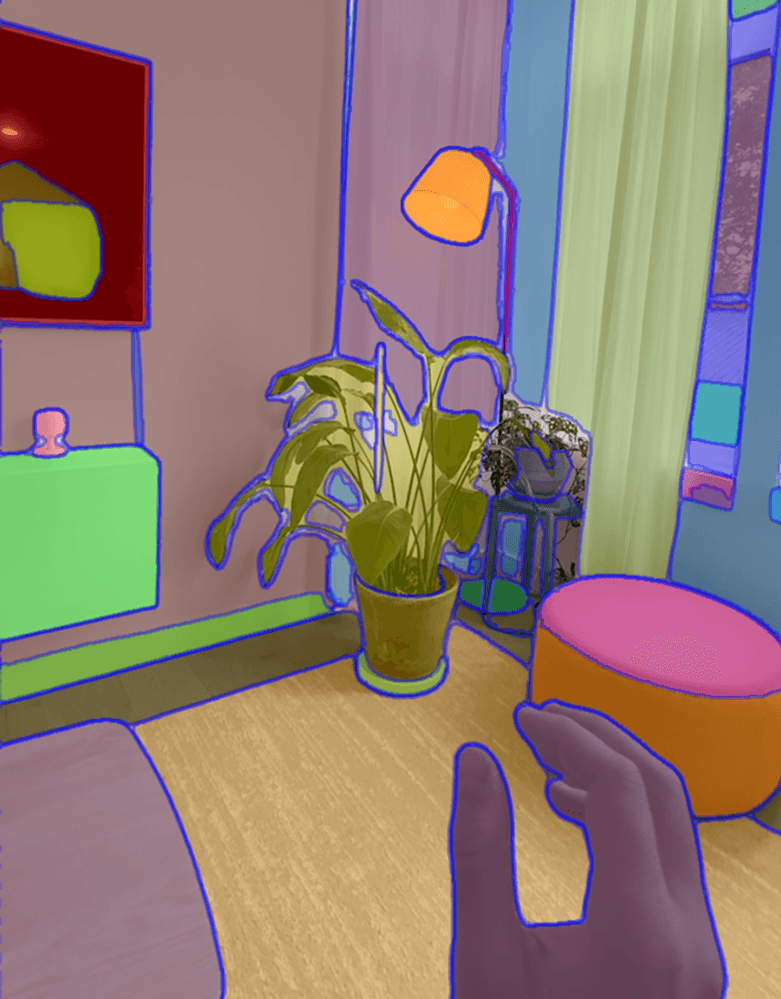
Labeling objects in real-time using pixel-based segmentation, offering broader but less precise tracking capabilities.
Labeling objects in real-time using pixel-based segmentation, offering broader but less precise tracking capabilities.
Dynamic Object Tracking
Dynamic Object Tracking
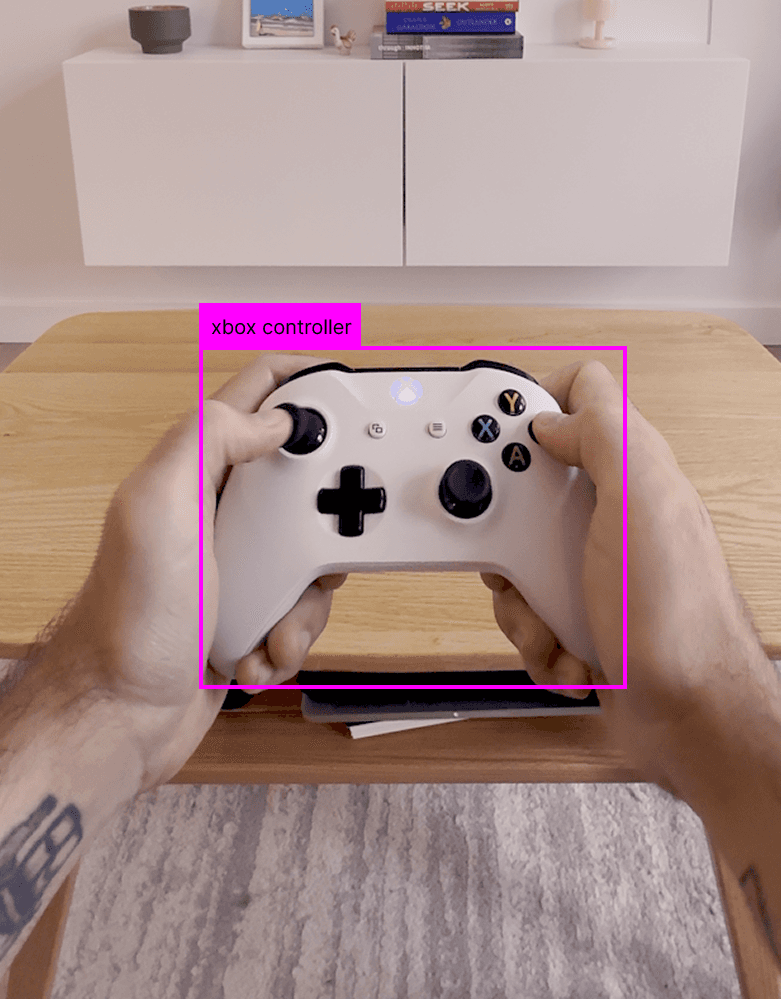
Training models to recognize specific features of known objects, like keyboards or controllers, for precise tracking and interaction.
Training models to recognize specific features of known objects, like keyboards or controllers, for precise tracking and interaction.
How?
BLE
Wi-Fi
UWB
…
BLE
Wi-Fi
UWB
…
Segmentation
Labeling objects in real-time using pixel-based segmentation, offering broader but less precise tracking capabilities.
Dynamic Object Tracking
Training models to recognize specific features of known objects, like keyboards or controllers, for precise tracking and interaction.
How?
BLE
Wi-Fi
UWB
…
Spatial Iteration
Spatial Iteration
I used ShapesXR to quickly iterate on the spatial experience. Trying these interactions in Mixed Reality early on is essential to understanding how they feel and work in practice. Spatial experiences cannot live in 2D. These mockups allow me to experiment with the UIs, positioning, and interactions rapidly, validating ideas before moving to more complex prototyping or visualization.
I used ShapesXR to quickly iterate on the spatial experience. Trying these interactions in Mixed Reality early on is essential to understanding how they feel and work in practice. Spatial experiences cannot live in 2D. These mockups allow me to experiment with the UIs, positioning, and interactions rapidly, validating ideas before moving to more complex prototyping or visualization.
I used ShapesXR to quickly iterate on the spatial experience. Trying these interactions in Mixed Reality early on is essential to understanding how they feel and work in practice. Spatial experiences cannot live in 2D. These mockups allow me to experiment with the UIs, positioning, and interactions rapidly, validating ideas before moving to more complex prototyping or visualization.
Vignettes
Vignettes
I recorded a series of vignettes demonstrating how spatial operating systems could surface spatial/contextual interactions natively.
I recorded a series of vignettes demonstrating how spatial operating systems could surface spatial/contextual interactions natively.
Ray-Ban Meta Case
Ray-Ban Meta Case
Smart Lamp
Smart Lamp
Xbox Controller
Xbox Controller
Smartphone and Bluetooth Speaker
Smartphone and Bluetooth Speaker
These vignettes are only scratching the surface. The potential for seamless, contextual interaction in Mixed Reality exists, but we need to start building it now.
These vignettes are only scratching the surface. The potential for seamless, contextual interaction in Mixed Reality exists, but we need to start building it now.